
Schistosomiasis remains among the most consequential neglected tropical diseases affecting public health, particularly in communities throughout sub-Saharan Africa where exposure to infested freshwater continues to sustain transmission. The disease is caused by parasitic blood flukes of the genus Schistosoma and is transmitted through contact with freshwater contaminated by cercariae released from infected freshwater snails. Among the human schistosome species, Schistosoma haematobium is responsible for urogenital schistosomiasis, a disease associated with haematuria, bladder damage, kidney complications, infertility, and an increased risk of bladder cancer. The continued transmission of schistosomiasis remains a major public health challenge due to inadequate sanitation, poor access to clean water, environmental conditions that favour the reproduction and survival of intermediate-host snails, and persistent human exposure to contaminated water sources [1]. The freshwater snail Bulinus globosus serves as an important intermediate host of Schistosoma haematobium in many endemic communities across Africa, although the contributions of individual snail species vary geographically. The parasite undergoes part of its life cycle within this snail before infective cercariae are released into surrounding water bodies, where they infect humans. Consequently, effective control of Bulinus globosus has been recognised as an important strategy for interrupting the transmission cycle of schistosomiasis. Reducing the snail population can significantly decrease parasite transmission and complement chemotherapy programmes aimed at reducing disease burden [2,3].
Although praziquantel remains the drug of choice for treating human schistosomiasis, reliance on chemotherapy alone presents several important public-health challenges. Praziquantel is highly effective against adult worms but has limited activity against some immature stages of the parasite and does not prevent reinfection in endemic communities. Continued dependence on a single chemotherapeutic agent has also raised concerns about the possible emergence of reduced drug susceptibility, especially in areas where repeated mass drug administration programmes are implemented. These limitations have encouraged researchers to investigate complementary approaches, including the discovery of novel bioactive compounds from medicinal plants and the development of environmentally friendly molluscicides for snail control [2,4].
Natural products have historically served as an important source of therapeutic agents for the treatment and management of infectious and parasitic diseases. Many modern medicines have originated from plants because of their rich diversity of biologically active secondary metabolites, including alkaloids, flavonoids, saponins, tannins, terpenoids, phenolics, glycosides, and steroids. These phytochemicals have been investigated for a range of potential biological activities, including antimicrobial, antioxidant, anti-inflammatory, antiparasitic, antiviral, antimalarial, and anthelmintic properties, making medicinal plants attractive candidates for drug discovery and disease control [4].
Among the numerous medicinal plants used in traditional medicine, Momordica charantia L. (bitter melon) has attracted considerable scientific attention because of its diverse pharmacological activities and abundance of bioactive compounds. The plant is widely cultivated in tropical and subtropical regions and has long been used for the treatment of diabetes, microbial infections, inflammatory disorders, gastrointestinal diseases, and parasitic infections. Different parts of the plant, including the leaves, fruits, seeds, and roots, contain a diverse range of phytochemicals, including flavonoids, alkaloids, saponins, phenolic compounds, tannins, triterpenoids, cucurbitane derivatives, glycosides, and ribosome-inactivating proteins that contribute to its medicinal properties [5].
Recent investigations have also explored the considerable pharmacological potential of Momordica charantia. Bortolotti et al. reported that the plant contains compounds with potential antiviral activity, particularly ribosome-inactivating proteins such as MAP30, which inhibit viral replication through multiple molecular pathways [6]. Similarly, Oliveira et al. demonstrated that the hydroethanolic leaf extract of Momordica charantia possesses significant anti-inflammatory and antioxidant activities by suppressing pro-inflammatory cytokines and inhibiting the MAPK/NF-\(\kappa\)B signalling pathway without reported evidence of toxicity under the animal-experiment conditions described by those authors [7]. These findings support the growing interest in the plant as a valuable source of pharmacologically active natural compounds.
In addition to its antiviral and anti-inflammatory activities, Momordica charantia has been reported to possess broad-spectrum antiparasitic and anthelmintic properties. According to Jegede et al., the plant exhibits activity against several parasitic organisms, which the authors discussed in relation to constituents such as alkaloids, flavonoids, tannins, saponins, phenolics, anthraquinones, glucosinolates, and momordin [8]. The authors discussed the possibility that these phytochemicals might influence parasite metabolism and survival, while recognizing the need for controlled investigations of specific compounds and comparisons with established anthelmintic treatments. Thirumal and Balalsubramanian also highlighted the plant’s antimicrobial, antifungal, antimalarial, anticancer, antioxidant, antiviral, and antiparasitic properties, further demonstrating its broad therapeutic relevance [9]. Additional studies have shown that phytoconstituents from Momordica charantia can exhibit antiviral activity against human T-lymphotropic virus type 1 (HTLV-1) [10]. Separately, applications of this plant in the development of nano-hydroxyapatite membranes illustrate its relevance to materials research and other biomedical fields; these material applications should not, however, be interpreted as evidence of molluscicidal efficacy [11].
Another medicinal plant receiving increasing scientific attention is Anthocleista djalonensis, a tropical species widely distributed across West and Central Africa. The plant has been widely used in several African traditional medicine systems for the treatment of malaria, diabetes, gastrointestinal disorders, bacterial infections, fungal diseases, inflammatory conditions, helminth infections, and liver disorders. Ethnobotanical evidence indicates that various parts of the plant, particularly the stem bark, leaves, and roots, possess significant medicinal value due to their rich phytochemical composition [12].
Phytochemical investigations of different tissues and solvent extracts have reported that Anthocleista djalonensis contains numerous potentially biologically active compounds, including alkaloids, flavonoids, tannins, saponins, phenolics, steroids, terpenoids, cardiac glycosides, anthraquinones, xanthones, stigmasterol, ursolic acid, sweroside, djalonensin, and several other secondary metabolites [13,14]. Philip-Attah et al. identified approximately fifty compounds in the stem bark through GC-MS analysis, suggesting that these constituents may account for the plant’s insecticidal and other biological activities [13]. Likewise, Enoghase and Innih documented the diversity of the reported phytochemicals and their associated pharmacological activities in a scoping review, while emphasizing that more standardized experimental work is needed to evaluate the biological effects of individual constituents [14].
Several pharmacological studies have also demonstrated the medicinal potential of Anthocleista djalonensis. Ogunboye and Crown reported that the plant possesses antibacterial, antimycobacterial, antimalarial, anti-inflammatory, antidiabetic, anthelmintic, antifungal, and cytotoxic activities [12]. Taiwe et al. further demonstrated that extracts of Anthocleista djalonensis exhibited significant antioxidant, anticonvulsant, and neuroprotective effects by improving antioxidant defence systems and reducing neuronal damage in experimental animal models [15]. Similarly, Bla et al. reported significant antiplasmodial activity of leaf extracts
against both clinical isolates and multidrug-resistant strains of Plasmodium falciparum [16]. Collectively, these findings suggest that the plant contains diverse bioactive compounds capable of exerting multiple biological effects against infectious organisms.
Despite the increasing scientific evidence supporting the pharmacological activities of Momordica charantia and Anthocleista djalonensis, most published studies have focused on their antioxidant, antimicrobial, antiviral, antimalarial, anti-inflammatory, antidiabetic, neuroprotective, and general anthelmintic properties [5,8,12,14]. Comparatively little research has directly evaluated the molluscicidal effects of these particular extracts against Bulinus globosus, the intermediate host responsible for transmitting Schistosoma haematobium. Consequently, important information remains lacking regarding their phytochemical composition in relation to snail toxicity and their potential contribution to integrated schistosomiasis control programmes.
Therefore, this study investigated the phytochemical composition and antischistosomal potential of Momordica charantia and Anthocleista djalonensis against Bulinus globosus, the intermediate host of Schistosoma haematobium. Specifically, the study evaluated the phytochemical constituents of both plant extracts and assessed their molluscicidal activities against Bulinus globosus under laboratory conditions. The findings provide preliminary laboratory evidence on the potential use of these indigenous medicinal plants as potential botanical agents that may prove affordable and environmentally acceptable after appropriate toxicity and field evaluations for schistosomiasis control, while also contributing to the growing search for plant-derived alternatives for the management of neglected tropical diseases.
This study employed a laboratory-based experimental design to investigate the phytochemical composition and antischistosomal potential of Momordica charantia and Anthocleista djalonensis against Bulinus globosus, the intermediate host of Schistosoma haematobium. The study involved the collection and preparation of plant materials, extraction of bioactive compounds, qualitative and quantitative phytochemical analyses, collection and maintenance of freshwater snails, and laboratory evaluation of the molluscicidal activities of the plant extracts at different concentrations and exposure periods.
Fresh leaves of Momordica charantia and stem bark of Anthocleista djalonensis were collected from naturally growing plants in Ogun State, Nigeria, with collection procedures conducted to preserve the integrity and identity of the samples, during the rainy season when the plants had reached maturity. The selected plant parts were chosen based on their extensive use in traditional medicine and reports of high concentrations of bioactive phytochemicals.
The plant samples were authenticated by a qualified taxonomist in the Department of Plant Science, where voucher specimens were prepared and deposited in the departmental herbarium for future reference. Table 1 presents the recorded scientific and local names, plant parts, and voucher numbers. The correspondence between the listed voucher specimens and the plant tissues used in the assays should be confirmed against the field and laboratory records. Following authentication, the collected plant materials were washed thoroughly with clean water to remove dirt and other contaminants before further processing.
Table 1. Medicinal plants used in the treatment of urinary schistosomiasis (Atosi Aja) in Ijoun communities
| Family | Scientific name | Common name | Local name | Plant part used | Voucher No |
| Gentianaceae | Anthocleista djalonensis | Cabbage tree | Sapo (Y); Putaa (H); Akpakoro (I) | Leaves | FH113349 |
| Cucurbitaceae | Momordica charantia | Bitter gourd | Ejirin (Y); Gyada (H); Ahuekele(I) | Leaves | FH112252 |
The collected plant materials were air-dried under shade at room temperature for approximately three weeks to preserve their phytochemical constituents and prevent degradation of heat-sensitive compounds. After complete drying, the samples were pulverised separately into fine powder using a laboratory electric grinder. The powdered samples were stored in clean, airtight containers at room temperature until required for extraction and phytochemical analyses.
Approximately 500 g of finely powdered material from each plant sample was soaked separately in 2.5 L of 70% ethanol for 72 hours with intermittent shaking to facilitate extraction of bioactive constituents from the prepared plant materials. Ethanol was selected because of its effectiveness in extracting a wide range of phytochemicals, including flavonoids, alkaloids, tannins, glycosides, phenolics, and terpenoids.
After extraction, the mixtures were filtered using sterile muslin cloth followed by Whatman No. 1 filter paper to remove plant debris. The filtrates were concentrated under reduced pressure using a rotary evaporator at 40\(^\circ\)C and further dried in a water bath to obtain crude extracts. The concentrated extracts were weighed to permit determination of extraction yield, and were subsequently stored in sterile amber bottles at 4\(^\circ\)C until required for laboratory experiments.
Adult Bulinus globosus snails were collected from freshwater streams and ponds located within schistosomiasis-endemic communities in Ogun State, Nigeria. The snails were identified using standard shell morphology and taxonomic identification keys. After collection, the snails were transported carefully to the Parasitology Laboratory in well-aerated plastic containers containing water from the collection sites to minimise handling-related stress.
In the laboratory, the snails were acclimatised for seven days in glass aquaria containing dechlorinated water maintained at a temperature of 25 \(\pm\) 2\(^\circ\)C under a 12-hour light and 12-hour dark photoperiod. The water was replaced every two days to maintain cleanliness and adequate oxygen levels. Fresh lettuce leaves and commercial fish feed were provided daily as food throughout the acclimatisation period. Only apparently healthy and active adult snails with shell diameters ranging from 8 to 12 mm were selected for the bioassays.
Qualitative phytochemical analyses were carried out on the crude extracts of Momordica charantia and Anthocleista djalonensis using standard laboratory procedures as described in established phytochemical protocols. The analyses were performed to determine the presence or absence of the following secondary metabolites: alkaloids, flavonoids, saponins, tannins, phenolic compounds, terpenoids, steroids, glycosides, and anthraquinones. Appropriate colour reactions, precipitation tests, and foam tests were used to identify each phytochemical constituent. The results were recorded as absent (\(-\)), slightly present (+), moderately present (++), or highly present (+++).
Quantitative determination of major phytochemicals was conducted using standard analytical methods. The concentrations of alkaloids, flavonoids, tannins, saponins, phenolics, and terpenoids were described as being determined and expressed as milligrams per gram (mg/g) of dry extract. The reported quantitative results table, however, uses milligrams per 100 grams (mg/100 g), and the underlying units should be verified before interpreting these values. All analyses were carried out in triplicate, and the average values were calculated.
Stock solutions of each crude extract were prepared by dissolving measured quantities of the extracts in distilled water containing a small amount of dimethyl sulphoxide (DMSO) to improve solubility. Five nominal experimental concentrations were prepared for each extract: 50 mg/L, 100 mg/L, 200 mg/L, 400 mg/L, and 800 mg/L. A control group containing only distilled water with the same concentration of DMSO was also prepared.
The molluscicidal activities of the extracts were evaluated with reference to World Health Organization guidelines for laboratory and field testing of molluscicides [3]. Ten healthy adult Bulinus globosus snails were introduced into each treatment container containing one of the prepared extract concentrations. Each treatment was performed in triplicate. The snails were exposed to the extracts for 24, 48, and 72 hours. At the end of each exposure period, the snails were transferred into fresh dechlorinated water and allowed to recover for another 24 hours before mortality assessment.
Snails were considered dead if they showed no movement, failed to respond to gentle mechanical stimulation with a dissecting needle, remained completely retracted inside the shell, or exhibited tissue decomposition. The percentage mortality for each treatment group was calculated using the formula:
The median lethal concentration (LC\(_{50}\)) and ninety percent lethal concentration (LC\(_{90}\)) of each extract were subsequently estimated using probit analysis.
Experimental assessments were described as having been conducted in triplicate, and results were expressed as mean \(\pm\) standard deviation (mean \(\pm\) SD). Data obtained from the phytochemical analyses and molluscicidal bioassays were analysed using IBM SPSS Statistics (Version 27.0). Descriptive statistics were used to summarise the phytochemical composition of both plant extracts. Differences in snail mortality among extract concentrations and exposure periods were analysed using one-way analysis of variance (ANOVA), followed by Tukey’s post hoc test where significant differences were observed. Probit regression analysis was used to estimate LC\(_{50}\) and LC\(_{90}\) values for each plant extract. All statistical tests were performed at a 95% confidence level, and differences were considered statistically significant at \(p < 0.05\).
The study involved laboratory experiments using freshwater snails and medicinal plants and did not involve human participants or vertebrate animals. Nevertheless, all laboratory procedures were conducted in accordance with institutional biosafety guidelines and standard ethical practices for handling living organisms. Plant materials were collected with appropriate permission from local authorities, while snail collection was carried out in a manner that minimised unnecessary disturbance to the aquatic ecosystem. All laboratory waste and unused plant extracts were disposed of following approved environmental safety procedures to prevent contamination of surrounding water bodies.
Qualitative phytochemical screening revealed that both Momordica charantia and Anthocleista djalonensis contained several classes of potentially biologically active secondary metabolites (Table 2). Saponins, flavonoids, terpenoids, steroids, and alkaloids were detected in samples from both plant species. Tannins were detected in Anthocleista djalonensis but were not detected in Momordica charantia under the reported qualitative screening conditions. Cardiac glycosides and anthraquinones were not detected in either extract.
Table 2. Qualitative phytochemical composition of Momordica charantia and Anthocleista djalonensis extracts
| Phytochemical | Momordica charantia | Anthocleista djalonensis |
| Saponins | ++ | ++ |
| Tannins | – | ++ |
| Flavonoids | + | ++ |
| Cardiac glycosides | – | – |
| Anthraquinones | – | – |
| Terpenoids | ++ | ++ |
| Steroids | +++ | +++ |
| Alkaloids | ++ | ++ |
Key: – = not detected; + = weakly detected; ++ = moderately detected; +++ = strongly detected (qualitative categories only).
Quantitative phytochemical analysis showed variations in the concentrations of the detected phytochemicals among the separately reported aqueous and methanolic extracts of the two plants (Table 3).
Table 3. Quantitative phytochemical composition of Momordica charantia and Anthocleista djalonensis extracts (mg/100 g)
| Plant | Extract | Alkaloids | Saponins | Tannins | Flavonoids | Glycosides | Anthraquinones |
| Momordica | Aqueous | 1.02 \(\pm\) 0.13 | 0.95 \(\pm\) 0.02 | Nil | 0.37 \(\pm\) 0.06 | Nil | Nil |
| charantia | Methanolic | 1.13 \(\pm\) 0.14 | 0.98 \(\pm\) 0.02 | Nil | 0.39 \(\pm\) 0.05 | Nil | Nil |
| Anthocleista | Aqueous | 1.05 \(\pm\) 0.15 | 0.89 \(\pm\) 0.10 | 0.92 \(\pm\) 0.10 | 0.88 \(\pm\) 0.10 | Nil | Nil |
| djalonensis | Methanolic | 1.35 \(\pm\) 0.16 | 0.95 \(\pm\) 0.10 | 0.99 \(\pm\) 0.10 | 0.89 \(\pm\) 0.10 | Nil | Nil |
For Momordica charantia, alkaloids measured 1.02 \(\pm\) 0.13 mg/100 g in the aqueous extract and 1.13 \(\pm\) 0.14 mg/100 g in the methanolic extract. Saponins were recorded as 0.95 \(\pm\) 0.02 mg/100 g and 0.98 \(\pm\) 0.02 mg/100 g in the aqueous and methanolic extracts, respectively. Flavonoids were present at 0.37 \(\pm\) 0.06 mg/100 g in the aqueous extract and 0.39 \(\pm\) 0.05 mg/100 g in the methanolic extract, while tannins, glycosides and anthraquinones were not detected.
In Anthocleista djalonensis, alkaloids were recorded at 1.05 \(\pm\) 0.15 mg/100 g in the aqueous extract and 1.35 \(\pm\) 0.16 mg/100 g in the methanolic extract. Saponins measured 0.89 \(\pm\) 0.10 mg/100 g and 0.95 \(\pm\) 0.10 mg/100 g in the aqueous and methanolic extracts, respectively. Tannins were present at 0.92 \(\pm\) 0.10 mg/100 g in the aqueous extract and 0.99 \(\pm\) 0.10 mg/100 g in the methanolic extract. Flavonoids were also detected in both extracts at 0.88 \(\pm\) 0.10 mg/100 g and 0.89 \(\pm\) 0.10 mg/100 g, respectively, whereas glycosides and anthraquinones were recorded as absent under the screening conditions reported.
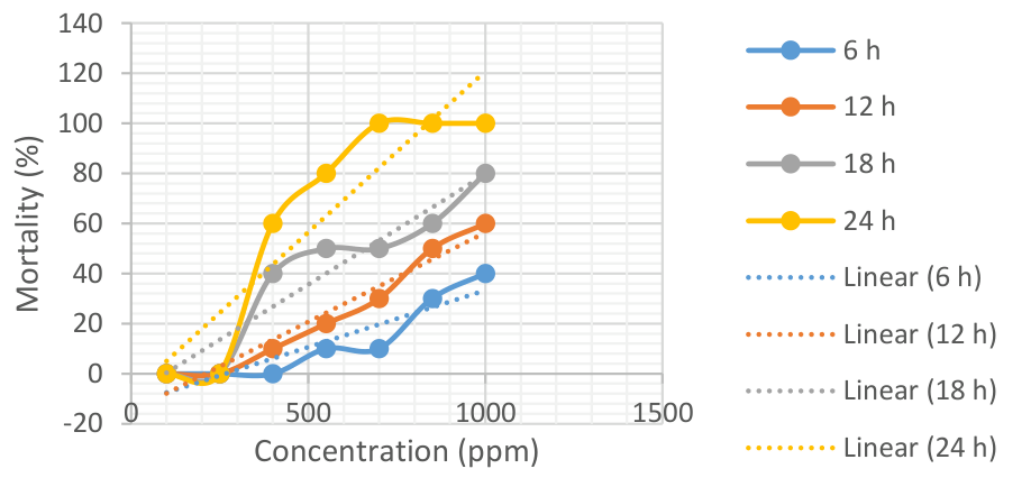
Both plant extracts demonstrated concentration- and exposure time-dependent molluscicidal activity against Bulinus globosus (Figures 1 and 2, and Tables 4 and 5).
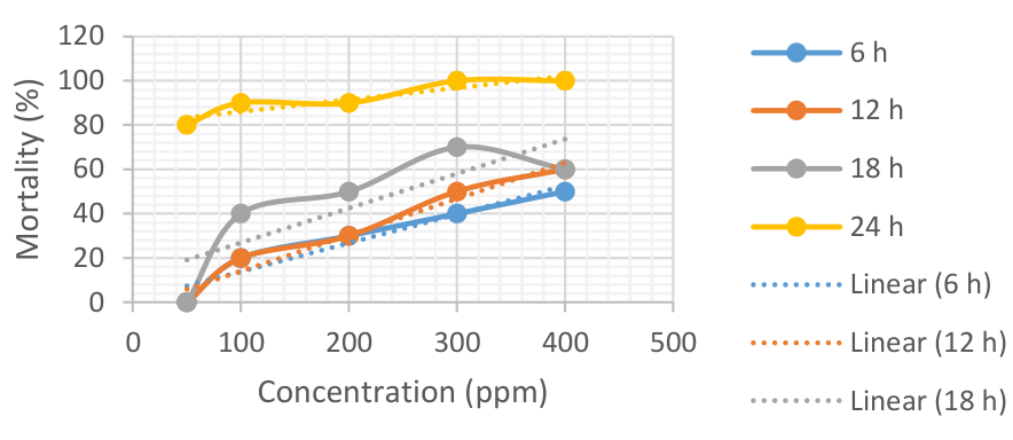
Table 4. Mortality (%) of Bulinus globosus exposed to Momordica charantia extract
| Nominal concentration (ppm) | 6 h | 12 h | 18 h | 24 h |
| 50 | 0 | 0 | 0 | 80 |
| 100 | 20 | 20 | 40 | 90 |
| 200 | 30 | 30 | 50 | 90 |
| 300 | 40 | 50 | 70 | 100 |
| 400 | 50 | 60 | 60 | 100 |
Table 5. Mortality (%) of Bulinus globosus exposed to Anthocleista djalonensis extract
| Nominal concentration (ppm) | 6 h | 12 h | 18 h | 24 h |
| 100 | 0 | 0 | 0 | 0 |
| 250 | 0 | 0 | 0 | 0 |
| 400 | 0 | 10 | 40 | 60 |
| 550 | 10 | 20 | 50 | 80 |
| 700 | 10 | 30 | 50 | 100 |
| 850 | 30 | 50 | 60 | 100 |
| 1000 | 40 | 60 | 80 | 100 |
For Momordica charantia, snail mortality generally increased with increasing nominal extract concentration and longer exposure duration, as indicated by the tabulated observations (Figure 1 and Table 4). At 50 ppm, no mortality was observed during the first 18 hours, while 80% mortality was recorded after 24 hours. At 100 ppm, mortality increased from 20% at 6 hours to 90% after 24 hours. Complete mortality (100%) was achieved after 24 hours at concentrations of 300 ppm and 400 ppm.
In Anthocleista djalonensis, no snail mortality was observed at 100 ppm or 250 ppm throughout the exposure period (Figure 2 and Table 5). At 400 ppm, mortality increased from 10% after 12 hours to 60% after 24 hours. Concentrations of 700 ppm, 850 ppm, and 1000 ppm produced 100% mortality after 24 hours, with mortality generally increasing as the duration of exposure increased in the observations presented.
Probit analysis showed that Momordica charantia was reported to have the lower numerical LC\(_{50}\) estimate (1.507) among the evaluated plant extracts, suggesting greater estimated molluscicidal activity under the model assumptions, subject to confirmation of the concentration scale and units. Anthocleista djalonensis recorded an LC\(_{50}\) value of 2.662. The reported LC\(_{90}\) estimates were 1.762 for Momordica charantia and 2.705 for Anthocleista djalonensis (Table 6).
Table 6. LC\(_{50}\) and LC\(_{90}\) values of Momordica charantia and Anthocleista djalonensis extracts against Bulinus globosus
| Plant extract | Regression equation | LC\(_{50}\) | Lower CL | Upper CL | LC\(_{90}\) | Lower CL | Upper CL |
| Momordica charantia | Y = –1.886 + 1.570X | 1.507006 | 1.262006 | 1.507006 | 1.761783 | 1.668383 | 1.855183 |
| Anthocleista djalonensis | Y = –24.036 + 9.217X | 2.662038 | 2.308038 | 2.662038 | 2.705436 | 2.296436 | 3.114436 |
The phytochemical screening of Momordica charantia and Anthocleista djalonensis revealed the presence of important secondary metabolites, including alkaloids, saponins, tannins, flavonoids, phenolics, and terpenoids. These findings corroborate recent studies on M. charantia and A. djalonensis, which similarly reported that both plants are rich in bioactive phytochemicals responsible for their broad pharmacological properties [7,13,14]. Likewise, Han et al. and Thirumal and Balalsubramanian described M. charantia as a medicinal plant with diverse phytochemical constituents that contribute to its antioxidant, antimicrobial, antiparasitic and antiinflammatory activities [5,9].
The present study further demonstrated that the extracts of both plants exhibited appreciable molluscicidal activity against Bulinus globosus, with snail mortality increasing as extract concentration increased. This concentration-dependent response is consistent with an extract-associated toxic effect on snail survival; however, the present measurements do not identify the constituents or physiological pathways responsible for that effect. Although recent studies on M. charantia have largely focused on its antiviral, anti-inflammatory and antiparasitic properties, they consistently attribute these biological activities to the abundance of compounds such as flavonoids, phenolics, saponins and alkaloids [6–8]. The findings are also consistent with the chemical screening reported by Philip-Attah et al., who identified numerous constituents in Anthocleista djalonensis stem bark, including phytochemical classes shared with the present study, including alkaloids, tannins, saponins, flavonoids, phenols and terpenoids, which were associated with significant insecticidal activity against stored-product pests [13]. Although their study targeted insect pests rather than freshwater snails, the biological activity observed supports the potential of A. djalonensis as a source of natural pesticidal compounds. Similarly, Ogunboye and Crown reported that A. djalonensis possesses several pharmacological properties, including antimicrobial, anthelmintic, antimalarial and cytotoxic activities, all of which have been linked to its rich phytochemical composition [12].
The dose-dependent increase in snail mortality recorded in this study further indicates that higher applied concentrations of the extracts delivered larger amounts of the crude mixtures into the exposure medium, potentially altering the survival of Bulinus globosus. This observation is consistent with the findings of Enoghase and Innih, who reviewed phytochemical diversity and reported biological activities in A. djalonensis, while noting the need for consistent extraction procedures and independent confirmation of the activities attributed to the plant [14]. Likewise, Oliveira et al. reported that the anti-inflammatory
activity of M. charantia leaf extract increased with concentration, reflecting the dose-dependent actions of its bioactive compounds [7]. Such evidence provides useful biological context, while the observed concentration-related molluscicidal effects in the present assays should be interpreted directly from the accompanying experimental data.
The phytochemical composition obtained in this study also agrees with previous reviews highlighting the therapeutic versatility of both plants. Bortolotti et al. emphasized that M. charantia contains several biologically active compounds with broad-spectrum pharmacological applications [6], while Han et al. identified the plant as an important source of natural compounds with antioxidant, antimicrobial, antiparasitic and health-promoting properties [5]. Similarly, Ogunboye and Crown and Taiwe et al. reported that Anthocleista djalonensis possesses diverse pharmacological activities, including antioxidant and neuroprotective properties, further demonstrating the medicinal importance of its phytochemical constituents [12,15]. Taken together, these studies provide useful background on the chemical diversity of both plants, although evidence of medicinal activity obtained from other experimental models does not independently establish the molluscicidal mechanism, environmental suitability, or field effectiveness of the extracts investigated here.
The interpretation of these screening data should also distinguish qualitative detection from quantitative abundance. A positive colour reaction indicates the presence of a phytochemical class under the test conditions, but it does not identify an individual molecule or establish the amount responsible for mortality. Similarly, the reported aqueous and methanolic measurements describe extract preparations that must be matched explicitly to the extraction and bioassay protocols before causal comparisons among solvents can be justified. The mortality tables provide observations at specified concentrations and time points, whereas the abstract gives a separate description of concentrations and exposure periods. These datasets should be reconciled against laboratory notebooks and raw replicate-level records before finalising lethal-concentration estimates and statistical conclusions. Such checks are important because mortality endpoints, exposure periods, concentration units, control survival, and recovery conditions directly affect the interpretation and comparability of molluscicidal studies. The higher mortality observed at some concentrations is an encouraging basis for further investigation, but it does not alone establish a field-ready, species-selective, or environmentally benign intervention.
This study demonstrated that Momordica charantia and Anthocleista djalonensis possess important phytochemical constituents, including alkaloids, saponins, tannins, flavonoids, phenolics, and terpenoids, which are associated with measurable laboratory molluscicidal activity against Bulinus globosus, the intermediate host of Schistosoma haematobium. The observed increase in snail mortality with increasing extract concentration indicates that both plant extracts exhibit concentration-dependent molluscicidal effects. The study provides preliminary experimental evidence supporting the traditional medicinal importance of these plants and highlights their potential as natural alternatives to synthetic molluscicides. Plant-derived molluscicides could contribute to more sustainable schistosomiasis control strategies by reducing populations of intermediate-host snails and limiting opportunities for parasite transmission. Such applications would nevertheless require independent confirmation of efficacy under field conditions, together with an assessment of effects on non-target aquatic organisms, water quality, and the surrounding environment. Further studies are, however, required to isolate and characterize the specific bioactive compounds responsible for the observed activity, determine their mechanisms of action and evaluate their efficacy and safety under field conditions.
Based on the findings of this study, the following recommendations are made:
This study was limited to laboratory evaluation of the phytochemical composition and molluscicidal activity of Momordica charantia and Anthocleista djalonensis extracts against Bulinus globosus. The active compounds responsible for the observed molluscicidal effects were not isolated or chemically characterized. In addition, the study did not evaluate the toxicity of the extracts on non-target aquatic organisms or assess their efficacy under natural field conditions. These limitations provide opportunities for further research.
Author Contributions: Thomas Sunday Adewoga conceived and designed the study, supervised the research, interpreted the findings, and critically reviewed the manuscript. Tajudeen O. O. Uthman conducted the laboratory experiments, collected and analyzed the data, performed the statistical analysis, and prepared the first draft of the manuscript. Adeyemi Lawrence Ogunneye carried out the phytochemical analyses, contributed to the interpretation of the phytochemical data, and reviewed and edited the manuscript. All authors read and approved the final version of the manuscript.
Conflicts of Interest: The authors declare that there are no conflicts of interest regarding the publication of this article.
Data Availability: The data generated and analyzed during this study are available from the corresponding author upon reasonable request.
Funding Information: This research was supported by the Tertiary Education Trust Fund (TETFund) Institution-Based Research (IBR) Intervention awarded to the authors through Tai Solarin Federal University of Education, Ijagun, Ogun State, Nigeria. The funding body provided financial support for the conduct of the study but had no role in the study design, data collection, data analysis, interpretation of results, manuscript preparation, or the decision to publish the findings.
Acknowledgments: The authors sincerely appreciate the Tertiary Education Trust Fund (TETFund) for providing financial support through the Institution-Based Research (IBR) Intervention. The authors also acknowledge the management of Tai Solarin Federal University of Education, Ijagun, Ogun State, Nigeria, for providing the enabling environment and laboratory facilities used in carrying out this study. Appreciation is equally extended to the technical staff of the Departments of Biological Sciences and Chemical Sciences for their assistance during laboratory analyses.